.jpg)
Fifty years after a play about a government stores office made a nation laugh at itself for the first time, Roger Hall is still turning up to his desk at nine, still uncertain the muse will show, and still, by his own admission, very possessive about the play that started it all.
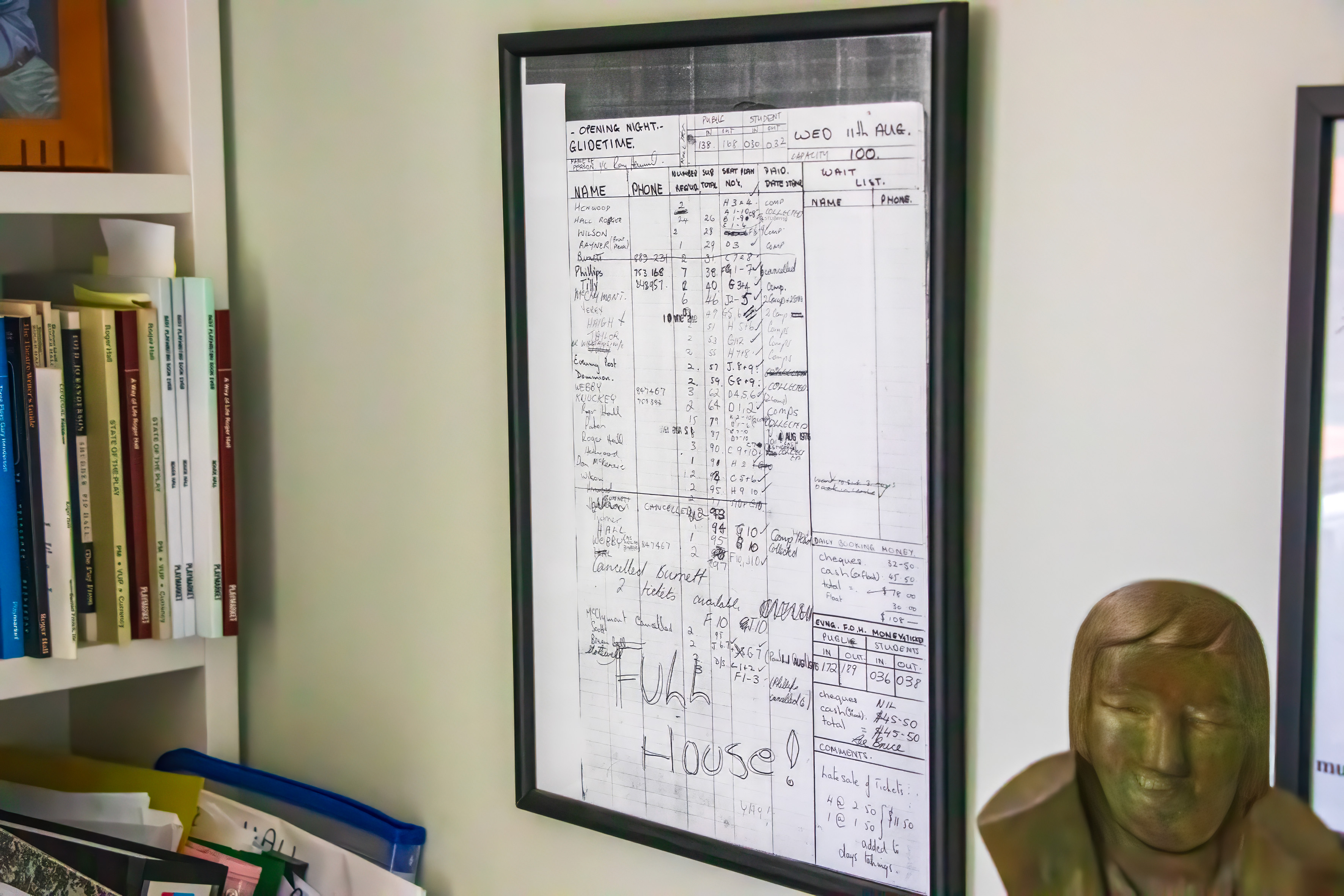
There is a photocopy on the wall of Roger Hall's study, behind the chair he sits in for this interview, that he still, fifty years on, seems faintly delighted by. It is a record of who booked tickets for the opening night of Glide Time at Circa Theatre, on the 11th of August, 1976. Down at the bottom, in capitals, someone has written FULL HOUSE. A few of the bookings have been struck through, cancelled. “And I thought, well, they'll be sorry,” Hall says, and laughs, in the particular way of a man who was right about something a very long time ago and has never quite stopped being pleased about it.
Hall is eighty-seven now, though nothing about the way he holds a story suggests it. He has just finished vividly recalling a woman who came into the Wellington insurance office where he worked as a young immigrant from London, wanting to insure her house in “Brooklyn.” He had no idea it was a Wellington suburb. “I said, is Brooklyn in Wellington? She said, go and get someone who knows what they're doing,” he says. “Which is understandable. But I sure learned a lot very quickly.”
It is the kind of story Hall has been turning into other people's laughter since his university capping show days and more so since depicting a Monday morning in 1976 when a fictional public servant named John walked onto the Circa Theatre stage, battered by Wellington's wind and rain, and said four words: “Wellington, I HATE you.”
“They recognised what they were seeing on stage. This is us.”
Glide Time turns fifty on the 11th of August this year. Phoenix Theatre is staging it for its fiftieth anniversary from the 18th of September at The PumpHouseTheatre in Takapuna - fittingly, since Hall has lived in Takapuna for years, and is the theatre's patron. “I'm grateful to you,” [Phoenix Theatre], “because you're doing a play of mine that hasn't been on for awhile, and it's always an honour. It's going to be very interesting for me to see another production. It's always fascinating.”
He can't remember the last time he saw it staged. “That's a good question. I have no idea,” he says. “They do tend to merge into each other” When it’s suggested it was twenty years ago. “Could well be. Yes.”
What Hall does remember, in exact and evidently well-worn detail, is the night it began. “The first thing that was interesting was that people came into the theatre and started laughing before the play began,” he says. “That was because they recognised what they were seeing on stage - the set, the Government Life poster on the wall. This is us. They'd never seen it before, almost literally. It was their world, which they hadn't seen on stage.”
There is a particular kind of national shyness that a first-time laugh like that can cure, and Hall knew it at the time, even if he is careful, now, about how he says so. “I did know this was changing things,” he says. “It sounds conceited, but I did.” Before Glide Time, he says, the community and amateur theatres that make up so much of the country's stage life “always did British plays. They never did New Zealand plays.” Then, slowly, they began. “They realised that yes, there's a lot of good New Zealand plays out there, and they began doing them.” He remembers being told about the opening night of the Fortune Theatre in Dunedin, not long after, when an audience member complained: she wished she'd had a nice British play instead. “Didn't take long to change,” he says.
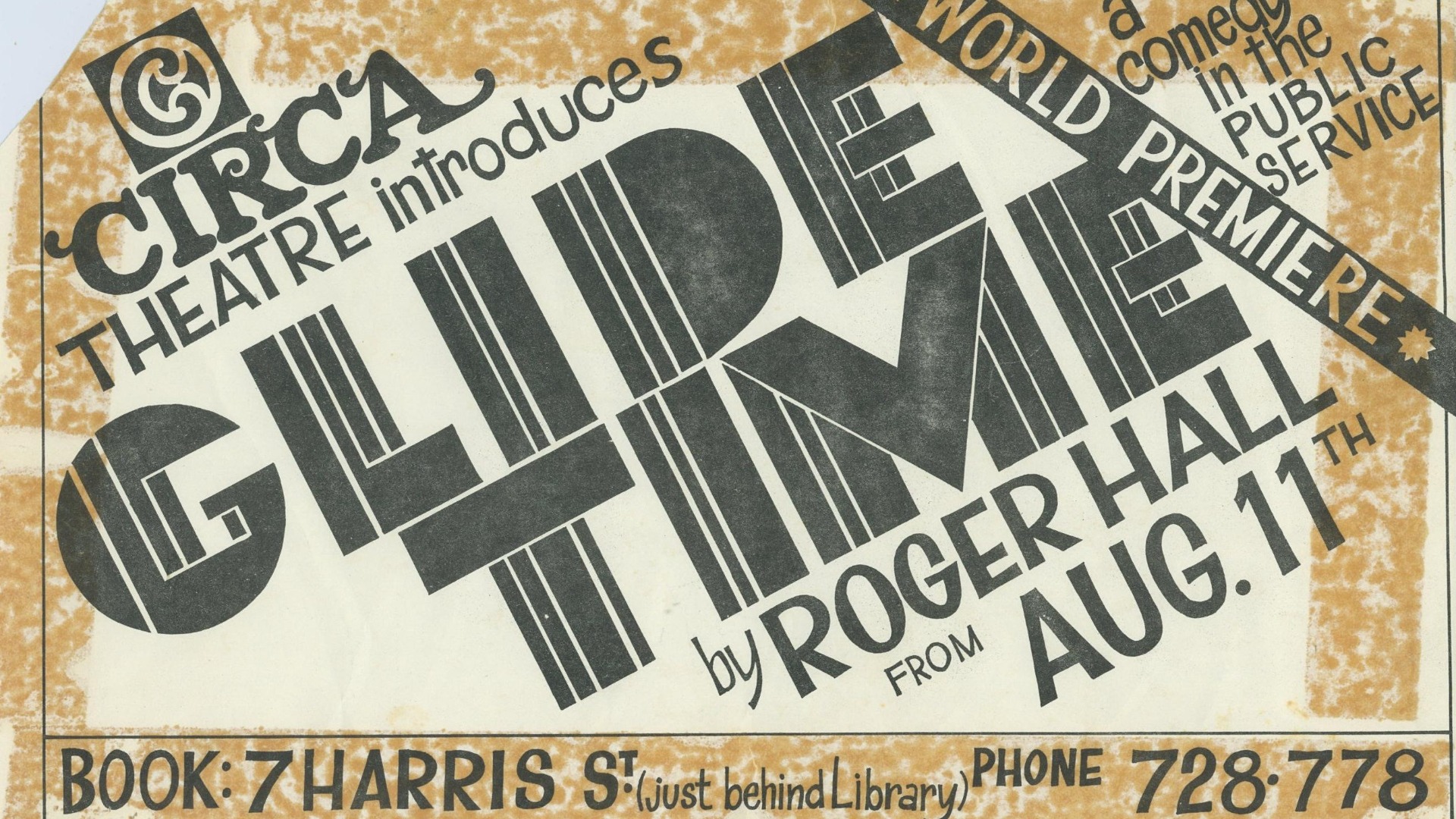
The play very nearly wasn't written in New Zealand at all, or rather, it wasn't written until Hall had first travelled a long way from home to realise what was sitting right in front of him. In the mid-1970s, on an Arts Council travel grant, he attended what was then called the Eugene O'Neill Memorial Playwrights Conference in Waterford, Connecticut, on the recommendation of the late New Zealand playwright Robert Lord. It was, Hall says, “a big deal.” Every night there was a rehearsed reading of a new play in progress, and every night the audience pronounced it wonderful. “And I thought, hang on. It's not that wonderful, you know.”
One of the young actors sitting in on those readings was a woman not yet particularly famous. “Meryl Streep was one of the actors. Imagine. I have said good morning, Meryl,” Hall says, with the timing of a man who knows exactly what he's doing by telling you this. “She wasn't a star or anything. But a whole lot of people were on their way up.” He wasn't permitted to say a word about the plays being read - “I wasn't allowed to comment, just observe” - so instead he sat with his own verdict. “I thought, I could write something better than this. And I went up to the library, and started writing a play.”
Write what you know, goes the old rule, and Hall knew an office. “I thought, first of all, just a play. Then, an office. Then I thought, public service. And then I knew.” He calls it, without much prompting, “a lightbulb moment.” He was working at School Publications at the time, a job he loved, and in a small act of bureaucratic irony he now seems entirely unbothered by, some of Glide Time was written at his desk, on the clock. “Which was considering the ultimate public service - using your time, being paid by the government, to do something else.”
He started writing around September or October, and by Christmas, he says, he had more or less finished. The drafts piled up around the sitting room of the family home, unlabelled and increasingly indistinguishable from one another, until Hall worked out a system: first draft A1, the next B1, and so on. “So painful, but necessary,” he says. Even the title took some finding. His original choice was Hard Day at the Office, which nobody at Circa much liked -“office” felt too American a word for the room. The title that stuck came, by Hall's account, from someone in the room during a read-through. “I think Ross Jolly shouted out Glide Time at a reading. Various people dispute that, but somebody did. I thought, oh yes, that's right, that's good.”
“People laughed and laughed and laughed. I really am onto something.”
The read-through itself, with the newly formed Circa company, is a memory Hall still reaches for with something close to wonder. “It was magic,” he says.“People's laughter - I've never equalled it. To hear people laughing at words you'd written some months ago, and it all fitted in.” He says he knew, privately, before anyone told him, that the play would work - not from the read-through alone, but from a hunch he'd been carrying since Connecticut. Most New Zealand plays up to that point looked backward, at history. “Hardly any plays looked at the present,” he says. “I thought, this is going to work. Just to myself.”
It did. The waiting list, before the production transferred to Wellington's OperaHouse to meet demand, ran past a thousand names. Hall remembers the box office at Circa in those early weeks almost as a physical sensation. “Caroline Henwood, bless her, would sit at the box office. The phone would ring, take an order, put it down - it rings straight away again. I went along. It was honestly so exciting.”
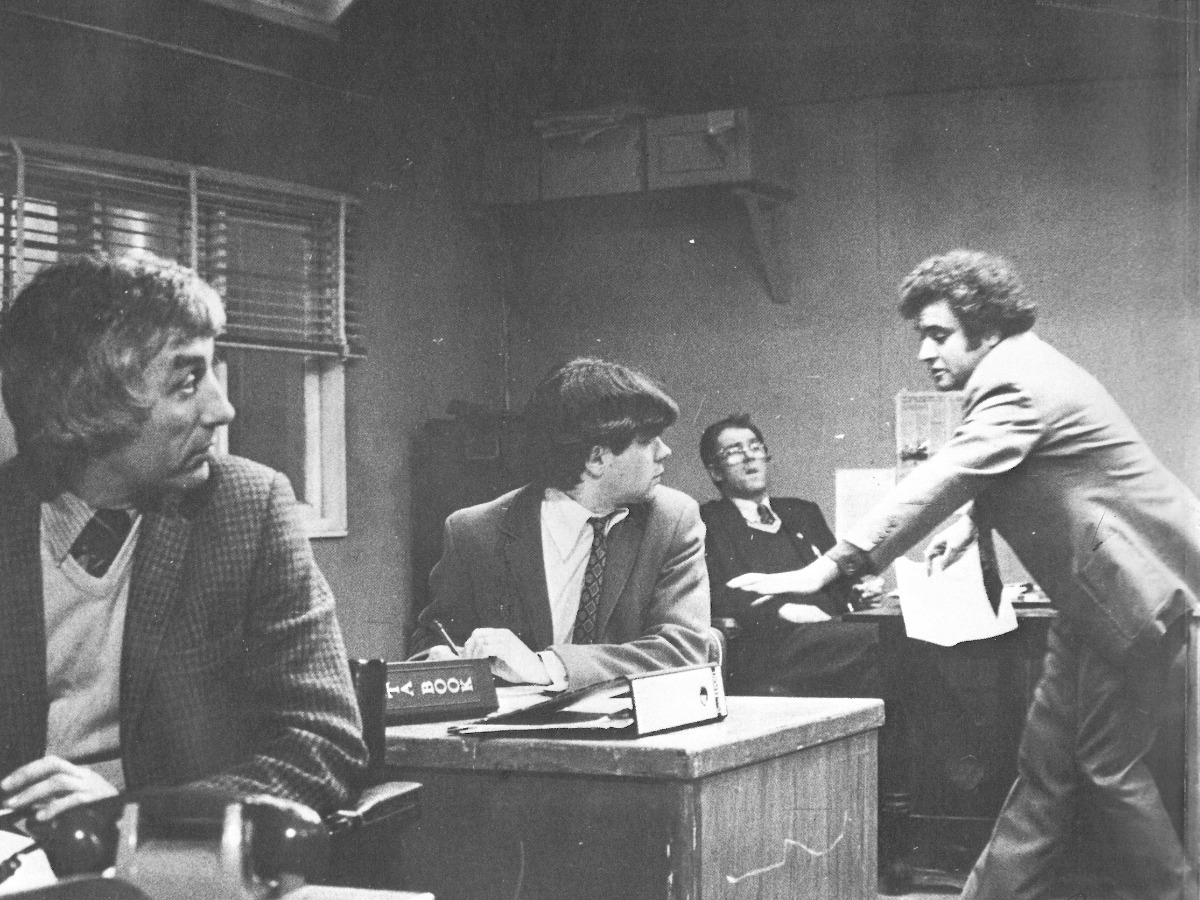
Middle Age Spread, his second play, followed not long after, and by Hall's own account did even better - a West End transfer, fifteen months in London, and, as he puts it with typical directness, “I was set for life, financially as well as reputation.” His London agent wanted him to stay in England and build a career there. He didn't. “I thought, you know, we're a New Zealand family, and I'm a New Zealand writer,” he says. “People would say, oh, of course you're English. And I said, yeah, I am born English, but I am a New Zealand writer. I wanted to bring my family up as New Zealanders.”
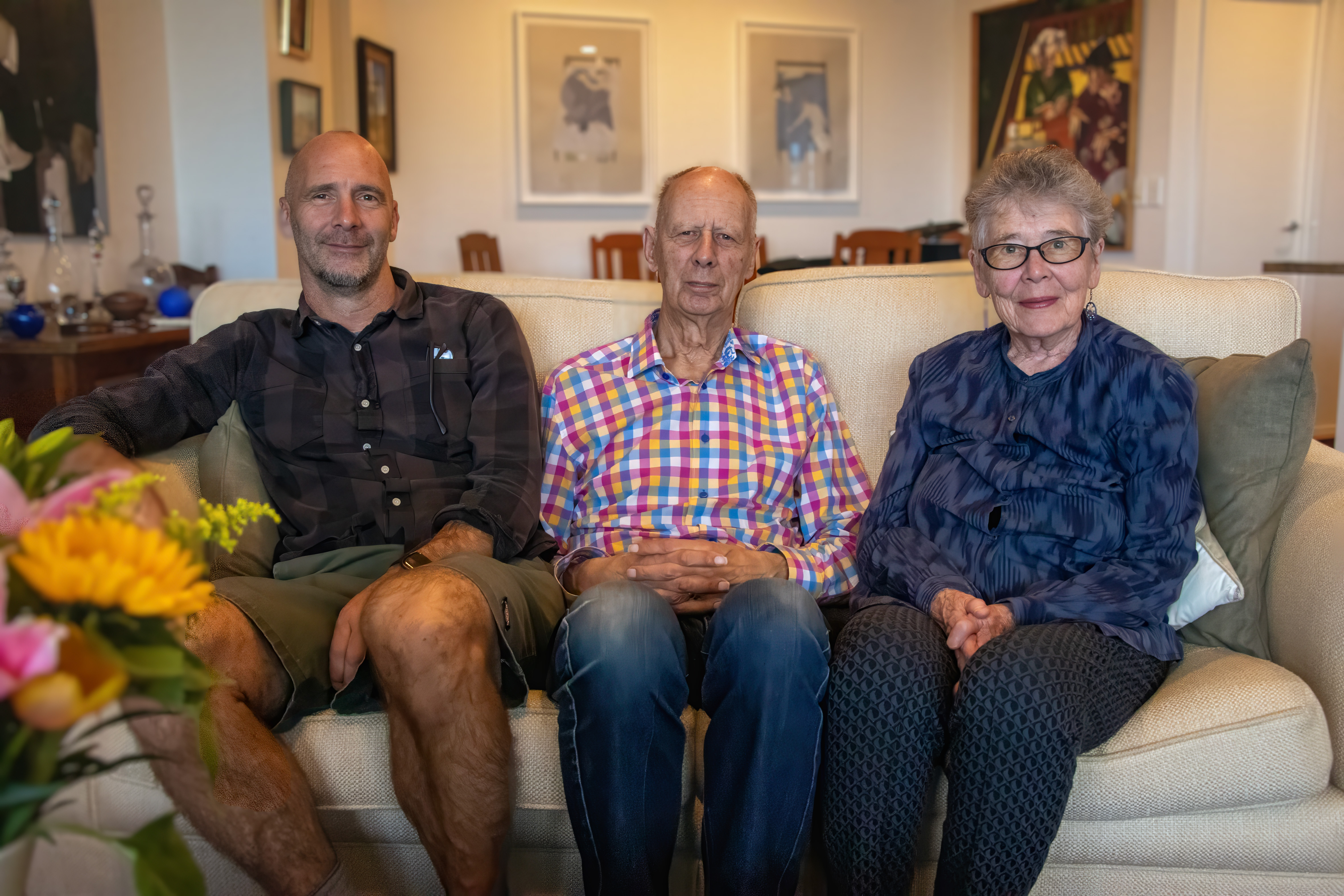
The choice to stay shaped everything that followed: more than forty plays across five decades, a Companion of the Queen's Service Order, the Turnovsky Prize, an honorary doctorate from Victoria University, a Companion of the New Zealand Order of Merit, a Fulbright fellowship, and in 2019, a knighthood - Knight Companion of the New Zealand Order of Merit, for services to theatre - invested by Dame Patsy Reddy, then Governor-General. Ask him what the honours mean, though, and the answer arrives without ceremony.“They're very enjoyable, but it doesn't change your life,” he says. “Being a Sir doesn't mean a damn thing, really, to most people, nor should it. It's nice to get the recognition, but it hasn't changed. The thing is, next day at nine, you sit at the typewriter and keep going.”
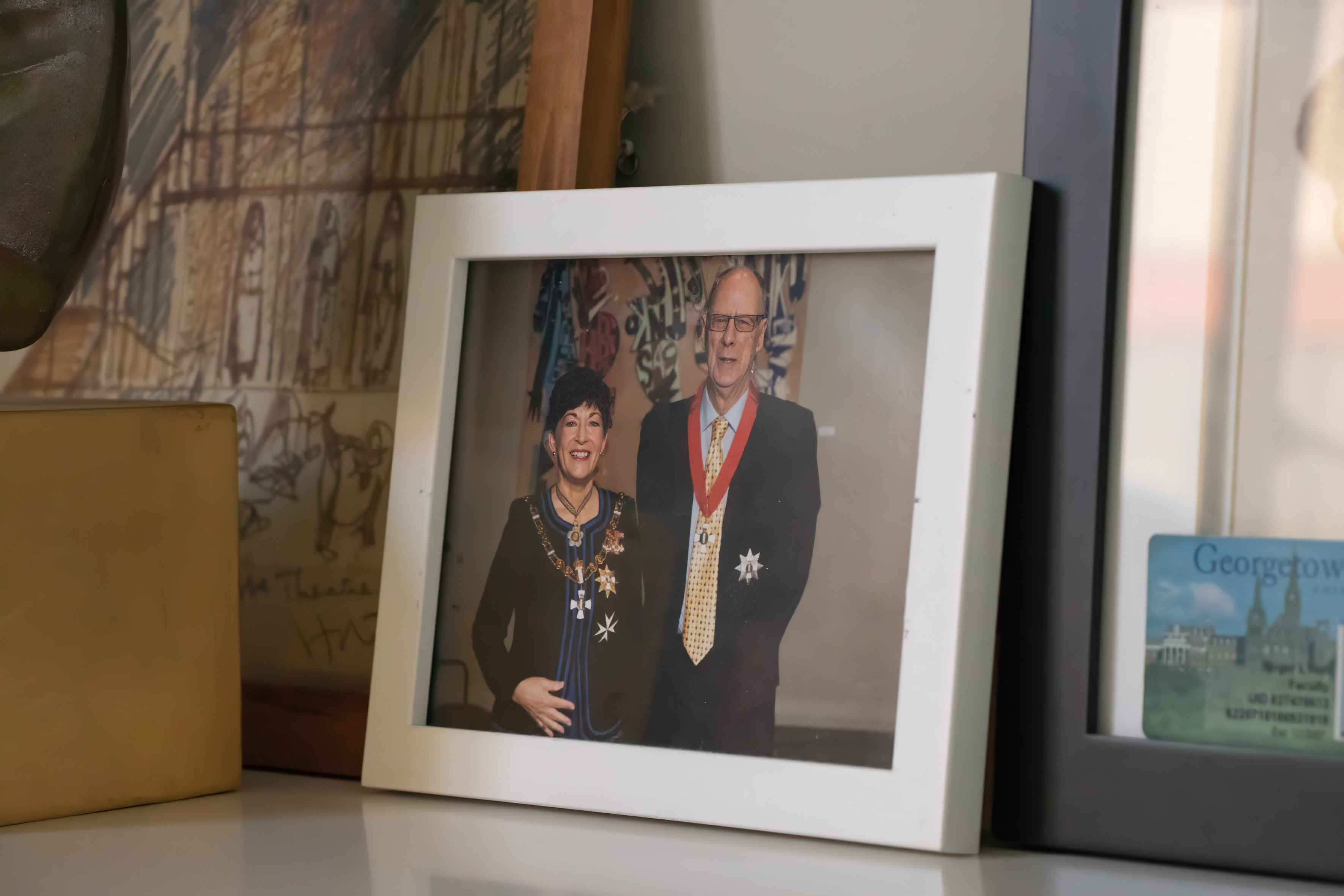
These days, the typewriter, or its modern equivalent, doesn't always cooperate. “Currently, I've been trying to write a play, and I sit down at nine, and after about four lines, the muse is completely disappeared,” he says, with no visible self-pity about it. “It's a shame, but I'm not complaining. I'm happy if I'm working on a project. But no project comes along.” It is, perhaps, the most telling sentence in the whole conversation: a man who has been called, without much argument from anyone, New Zealand's most successful playwright, sitting down most mornings simply hoping something will happen.
Hall has never been precious about being reliable, even if it comes with a cost. He is, by his own description, “something of a sure thing” for theatre companies - a Roger Hall play means bums on seats, to borrow the title of his memoir that is now out of print. “It's a bit of a stress, but I rather like it, really, ”he says. “Especially when amateur theatres began to do a Roger Hall play, which meant they discovered New Zealand could write plays, and audiences would enjoy them. That was one of my great achievements, really - converting audiences to realise that what is all around them is just as interesting as what comes from America and Australia.”
Younger playwrights, he knows, have sometimes filed his work under middle class, or comfortable. He does not reach for a defence. “Well,” he says, “that's their problem, not mine.”
“That's their problem, not mine.”
What he is less settled about, ahead of September, is how a fifty-year-old play about typing pools, time sheets and a woman whose only phone calls are from her mother will land with an audience who has never worked in an office like it. “I am concerned that a younger generation will think, is this what our parents thought was funny,” he says. “I am a bit anxious that it will seem so dated it may not seem funny.” His advice to anyone going, regardless: “Just go along to the theatre, and hope you have a good time.”
He is fairly certain he'll go more than once during the season, drawn by something that has nothing to do with nostalgia. “That's another very interesting thing, to see how things change, you know, little bits,” he says. He already knows where he'll sit. “Halfway back, and a bit elevated, at the end of a row, so I can stretch my legs and get out if necessary.”
Ask Hall what makes a line funny and you get, briefly, the closest thing to a craft lecture he'll offer. “When you're writing a play, you have to mix up your characters,” he says. “Otherwise they all sound the same, they've just got different names. You've got to try and give different actual characters, which is one of the major skills of playwriting.” Glide Time's Welsh immigrant, Hugh, exists for exactly that reason - a figure from outside the room, able to comment on New Zealand life without New Zealand's own blind spots. “It was a good inspiration to have an immigrant,” Hall says. “I didn't even think of it as anything with it. It was so obvious. So there's this figure from outside, making his acid comments about things.”
His own favourite line in the play belongs to Beryl, the office's put-upon, softly tragic heart, who answers every ringing phone the same way: “Hello, Mum,” because her mother is the only person who ever calls. “Which is both funny and very sad,” Hall says, and doesn't elaborate further, because he doesn't need to.
Hall's affection for live theatre, unlike his affection for his own back catalogue, comes with worry attached. “I wish it was a strong contender,” he says, of theatre's chances against Netflix and screens and a generation raised on neither. “I think Covid was a terrible damage to live theatre. It's never really recovered.” Closer to home, he mourns the closure of Tim Bray Theatre Company, whose children's programming had been a fixture at The PumpHouse for years and whose absence, he says, has left a gap nobody has quite filled.“PumpHouse is a huge asset for the North Shore,” he says. “I don't think people always appreciate it as much as they should.”
A perfect North Shore day, in Hall's telling, doesn't actually require a theatre at all, though one certainly helps. “The beach is a big thing,” he says of Takapuna, which he can see from his lounge window. “To go out, walk along there, and have a swim - that's perfect.” Then, almost as an afterthought, the closing note of a man who has spent fifty years turning ordinary rooms into something an audience recognises as their own: “But I still think there's huge chunks of people who don't really go to the Bruce Mason, or the PumpHouse, and realise what an asset it is.”